I did Power Rangers Season By Season but never really thought it through to make a post about Super Sentai series, I decided to divide it by decades, but I won't be doing 1975-1989 because I haven't seen enough of those series nor do I have the time nor interest, maybe Sean Akizuki will do it. Hint Hint.
Gaoranger (2001)
While it seemed to go somewhere with promised, it seemed to loose itself. If Power Ranger fans complain of the repeativeness of "Never Give Up," Soutarou and Kai said it in English and just as much. It was the first series to have more than just core mecha and had multiple auxilary mecha, and probably more than we got lately. The series was to tell us to be kind to our enviroment and so on, but it came preachy and didn't really have solutions and didn't scratch the service. And god being a little kid really didn't help either. Themes: Redemption, Rash decisions, Forgetting the Past, Unrequited Love, Perseving life and the past, Soul Searching.
Hurricanger (2002)
I saw this whole series and I loved it, it is not as concise as Shinkenger nor jam-packed as Gokaiger, it is a bit un-even. It is about growing up, with the trio of lazy happy-go-luckies and the gloomy guses Goraijer who were sent to kill each other by their father and the mysterious Shinkenger, who lost his human face to be the best ninja. Also, Oboro who had to escape her father's shadow. The villains are various, somewhat developed but some came out not as fully realized. Kouta and Isshu didn't seem to be that developed Themes: Death, Maturity, Freedom, Father's shadow, Teamwork, Acceptance, and Love.
Abaranger (2003)
What a complex series! Some people just dismiss the series for being 'goofy' (talking dinos) but, it is actually very dark. Some that love the series believe the goofiness help excuse the darkness. I mean, for god's sake, Mahoro gets raped by the evil big boss, well in a magical way. I like the double-entredees it served but the series did tip-toe a thin tightrope line for taste. There was cartoon effects, some surreal moments and then some creepy and adult moments. Creepy as in Rije hanging with Mikoto with a little girl crush and then growing up and having to be betrothed to him. It was indeed uneven and sometimes seem to not be logic with its own logic (Like Mikoto witnessing the first episode events or Ryota having to be in charge of his niece while fighting evil).
Dekaranger (2004)
For a while of not having a Pink Ranger, we got one and about 10 Rangers, even if some were guests. "Deka" means 10 but also nickname for detective. Ban is the most controversial Red Ranger of recent times for US fans because of his behavior, a rash childish and arrogant de facto leader. This series served more of a single-episode format and less of an arc-feel. For one, there was no main lair for the villains nor a long-standing villainess. It had fuzzy and furry aliens and some goofy elements but was still serious and fun. They had catchy 70's-retro music as well. Themes include Maturity, Selfishness, Teamwork, Acceptance, Forgiveness, Beliving in one's self, Dependence, Not judging books by covers, and Recognition.
Magiranger (2005)
I saw the whole series and even though I liked it, I feel it was a bit uneven. The series was about growing up and family, each Magiranger bringing their own flavor. Houka, I felt, was upbeat and dismissive of dire events and had her own world but did care for her family. Mikoto sacrificed much of his personal life for the family, feeling responsibility as the eldest. Kai was just rash and had lots to learn. Urara was the sensible one and Tsubasa seemed to be cold and tough but he was a softy inside. I felt some of the Wolzard-Kai drama was heavy-handed and the excuse given for MagiMother not being dead a little thin. Also, I felt that the Urara-Hikaru romance should had been explored more. Themes include Growing up, Death, Acceptance, Responsiblity, Family, and Restraint.
Boukenger (2006)
I saw the whole series twice and even though it was a 30th anniversary series, it didn't have a lot of obvious elements of past series like Gokaiger but to the keen observer, it kept the spirit of the whole Super Sentai series in themes and motifs. I feel the whole series is concise and very organized and cleaned. It is a very well-tought out series and if even though there is a whole gallery of villains, they are all explored and fleshed out, except for Gahja who seemes to be a bit one-note, even for the villain who stayed the longest. Akashi was a stalwart brave leader, high contrast to current leaders and a call-back to old leaders. Eiji as the sixth had a highly complicated storyline, probably the most complicated for a sixth at the time, rivaling with Burai, GaoSilver, and Shurikenger. Themes are Darkness, Adventure, One's Past, Coldness, Crushes, Speaking out emotions, and taking Risks.
Gekiranger (2007)
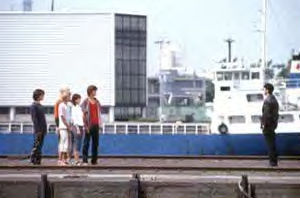
A series to have a lot of firsts (Villains to be main focus, villainess to have a 'zord', heroes with no belts, first violet hero, etc.), it is very arc-y and a very complex emotional story. Many fans believe it is very Anime-influenced, as many of the writers were former Anime writers. I saw the whole series, I loved it but I have to admit it is a bit drawn out and uneven, the first half has good pace but the second half, it is either rushed or too crammed in. I hate saying this but maybe it would had served better without Violet and Chopper, so it could unravel its tangles of the main 5. Some of the characters were nicely fleshed out but suffered very little characterization, if that makes sense. Themes include Darkness, One's Past, Teamwork, Acceptance, Love, Responsibility, Redemption, Training, Patience, Hardwork and Destiny.
Go-Onger (2008)
I don't know why American fans dismiss this series as 'goofy' or compare it to Carranger or Abaranger, because for me, it is not the same. Maybe because of the talking Engines, their flapping mouths and Anime holograms that appear out of the henshin devices. I feel the series is well fleshed-out, fun and not so 'goofy.' It has slapstick humor but it is played pretty straight-forward. Sousuke first comes out as rash, jump before looking but he learns from his mistakes and is a good leader. Some characters may have not got a lot of development but the creativity and merriment makes up for it. And the addition of Engines didn't feel like they didn't fit in like other mecha in past series when introduced but they all meshed well, as the Engines were characters as well. Themes include Growing Up, Friendship, 'The Only One,' Recognition, Redemption, and Teamwork.
Shinkenger (2009)
Many fans praise this series but some might not like it, but it is arguably a small group who don't like it. Some believe the series is serious, but some believe it is a homage to Japanese theater that everyone looks serious, but making fun of seriousness and it is suppose to be funny. I feel like the series is well-thought out, serious but also fun and has a lot of characterization for both the heroes and villains. The women are delightful characters. Maybe Doukoku didn't get a lot of development, but as the main villain, he might have to keep the air of mysteriousness. Seeing that Samurai is following Shinkenger to a tee, it definitely is not the same. if you just look at the writing and not focus on the acting, I think it is both a question of culture and tone. I don't think Samurai is achieving the same tone as Shinkenger. I think it is easier to accept delivery of tone from a Japanese actor than the same exact theme but slightly toned-down tone from an American actor. Themes include Tradition, Sacrifice, Love, Promises, Dreams, Destiny, Selfishness, Responsibility, and Dedication.

Goseiger (2010)
While I felt the Shinkenger team were on top of things and ahead of the curb and really sharp, I feel Goseiger got the short-end of the stick. I don't know if it was because they were suppose to be foreign to Earth but I always felt like the Goseiger took too long to figure out things. it is a solid series, but I personally found it boring.But just because I found it boring, doesn't mean it is a bad series. I always believe every season of Power Ranger and Super Sentai series should be seen on its own and not compared to previous seasons. Some of the Goseiger didn't get much characterization and since the villains didn't last long, it was hard to get development from them. Themes are Growing Up, Fish out of water, Seeing value of life, Responsibility, Acceptance, Sacrifice and Dedication.
Gokaiger (2011)
It's not finished yet but I felt I could speak about it as it is half-way done at 33 episodes. Everyone is already raving that it is a great series and of course there could be people that don't like it and that's fine. Gokaiger pays homage to past series but still maintains its own mythology and pathos and character development. Even though the villains haven't got that much development, I think that is forgivable because there is just so much the writers have to cram in. Imagine, they have to dedicate one or two episodes on a past series (that some writers had written for and others hadn't) and also cover everything else they usually have to do (six hero characterization, new arsenal introductions, monster of the day, villains and etc.). Themes include Determination, One's Past, Redemption, Sacrifice, Taking risks, Teamwork, Knowledge is power, Don't judge a book by its cover, Forgiveness, Never Give Up on someone, Dedication, and Responsibility.




 Gekiranger (2007)


